.png)
February 07, 2026
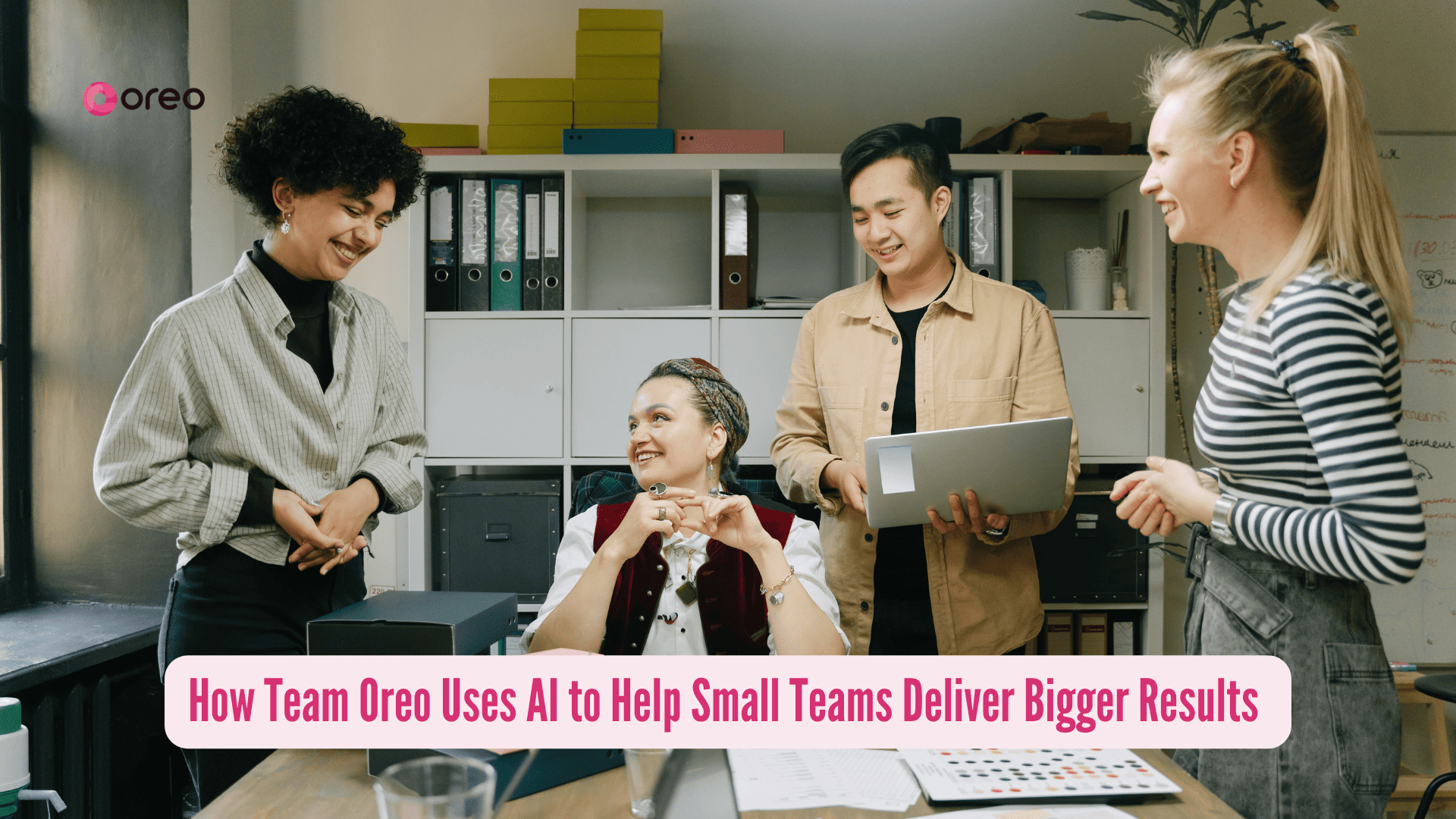
How Team Oreo Uses AI to Help Small Teams Deliver Bigger Results
Small teams don’t struggle because they lack talent. They struggle because they’re stretched across too many responsibilities at once. Delivery, client communication, reporting, planning, documentation all happening in parallel.
At Team Oreo, we work closely with small and mid-sized teams across IT services and consultancy projects. Over the last year, we’ve introduced practical AI workflows into real client environments. Not experiments. Not theory. Actual day-to-day operations.
Here’s what changed, what worked, and what other small teams can learn from it.
The Client Situation: High Skill, Low Bandwidth
One of our consultancy clients a growing service operations team had strong technical capability but constant delivery pressure.
Their reality looked like this:
-
Project managers writing status reports late at night
-
Engineers documenting fixes after delivery instead of during
-
Client emails piling up during sprint cycles
-
Meetings happening, but action points getting lost
-
Planning done manually across scattered tools
Nothing was broken. But everything was slower than it should have been.
They didn’t need more staff yet. They needed breathing room.
Step One: We Identified the Time Leaks
Before introducing any tools, we mapped where time was actually going.
The biggest drains were:
-
Repetitive report writing
-
Meeting summaries and follow-ups
-
Proposal and scope draft creation
-
Internal documentation formatting
-
Client update emails
These are necessary tasks but they don’t need to start from scratch every time. That’s where we introduced targeted AI support.
Step Two: AI-Assisted Reporting Workflow
Problem: Weekly client reports took 2–3 hours each to compile and write.
What we implemented:
We set up an AI-assisted reporting workflow where raw project notes, ticket summaries, and milestone updates were fed into an AI drafting template.
Resulting workflow:
-
Team drops bullet-point updates
-
AI generates structured first draft
-
Project manager reviews and adjusts
-
Final version goes to client
Impact:
Report creation time dropped by more than half. Quality became more consistent. No more last-minute rush writing.
Step Three: Smarter Meeting Capture
Problem: Important decisions were discussed in meetings but not always tracked properly afterward.
What we implemented:
AI meeting summarization and action extraction.
New flow:
-
Meeting transcript captured
-
AI produces:
-
summary
-
decisions made
-
action items
-
owners
-
deadlines
-
-
Output pushed into task tracker
Impact:
Follow-through improved. Fewer missed tasks. Less “I thought you were handling that.”
Step Four: Faster Technical Documentation
Technical teams often delay documentation because delivery comes first. That creates risk later.
Problem: Engineers avoided writing structured documentation because it was time-heavy.
What we implemented:
AI-assisted documentation drafting using structured prompts:
-
Input: config notes, commands, architecture points
-
Output: formatted technical draft
-
Engineer reviews and corrects
Impact:
Documentation completion rate increased. Knowledge stopped living only in people’s heads.
Step Five: Proposal and Scope Draft Acceleration
Sales and pre-sales teams often lose hours drafting similar proposals repeatedly.
Problem: Each proposal started from a blank page.
What we implemented:
AI proposal skeletons trained on past approved proposals.
New process:
-
Input: client type, scope outline, constraints
-
AI generates structured proposal draft
-
Consultant customizes specifics
Impact:
Proposal turnaround became faster without sounding generic. Teams spent more time refining strategy and less time formatting text.
Adoption Approach: No Big Bang Rollout
Here’s what we learned quickly — forcing AI tools into a team never works.
Instead, we used a phased approach:
-
One use case at a time
-
Short live demos
-
Real examples from their own projects
-
Clear review rules (AI drafts are never final output)
-
Feedback loop every two weeks
Confidence grew because results were visible early.
What Actually Changed for the Team
After three months, the difference wasn’t just speed. It was working style.
Observed changes:
-
More on-time reporting
-
Shorter admin cycles
-
Better task clarity
-
Less after-hours writing
-
More focus on client problem-solving
-
Lower cognitive load on senior staff
AI didn’t replace roles. It removed friction.
Key Lessons for Small Teams
From our consultancy work, a few patterns are clear:
Start where repetition is high
Reports, summaries, drafts — easiest wins.
Never skip human review
AI accelerates — people validate.
Standardize prompts and templates
Consistency multiplies value.
Measure time saved
If you don’t measure it, adoption fades.
Train with real work, not demos
Use live tasks, not fake examples.
The Takeaway
Small teams don’t need complex AI programs. They need practical leverage in everyday work.
When AI handles the repeatable groundwork drafting, summarizing, structuring your people get their time and focus back. That’s where real value shows up: better decisions, better delivery, better client outcomes.
Any Questions -
Please - [email protected]
.png)
Categories
- Admin
- Press Office
- Tech Industry
- Apple Products
- Cryptocurrency
- Technology